Middle Eastern distributors rarely provide materials for only one type of mortar. Their usual clients often include makers of tile adhesive, wall putty plants, and experts in waterproofing. They also serve flooring contractors, companies making gypsum items, and suppliers of insulation systems. Every single group needs a special mix of stickiness, bending ability, and water protection. Open time matters a lot. Workability is very important too.
Because of this, choosing VAE powder just by looking at the cost can create big problems later. The selected type needs to fit the mortar recipe. It must suit the local weather as well. Furthermore, it has to work with the mixing method and meet the needed results at the building site. Right now, the industry is moving towards faster repairs and better energy-saving insulation. Buyers also demand large floor setups, durable water protection, and dry-mix goods made in factories. These current market moves make choosing the right grade very important for local suppliers.
Why Middle East conditions affect VAE powder selection
This area is certainly not one simple, matching market. The weather, base materials, building speed, and local rules change a lot from place to place. You will notice big differences between city jobs, areas near the sea, and dry places inland. Very hot building spots bring their own special hurdles. A type of powder that performs great in a cold test room could behave in a totally different way outside. This occurs when builders mix and spread the mortar in heavy heat. It also happens when the air is very dry.
For these reasons, suppliers need to check a powder by looking at its real final use. They should avoid just reading the name in the book. The main questions to ask are very clear:
Must the mortar stay very stiff, or does it need room to bend?
Will water hit it, or will it face rough weather outside?
Do the workers need a longer open time to finish the job?
Are the builders going to spread this material very thin?
Is the mortar made with cement, based on gypsum, or changed using polymers?
Will the plant mix it by hand, or will they use a dry blending machine?
Heat, workability, and fast construction
Heavy heat can cut down the open time very fast. This makes spreading tile adhesive or plaster mortar a lot harder. A good VAE-based RDP can help the mix spread better. It also makes it stick better. Furthermore, it helps stop the mix from sliding down the wall. It holds onto water better too. This works well if the entire recipe has a good balance.
For suppliers, this means chatting with buyers must go past simply calling things "stiff" or "soft." You need to ask about the water used for mixing. You should also check how much liquid the base wall absorbs. It is very helpful to talk about how thick the layer will be. Finding out the drying setting and the needed working time is smart too. These small facts often explain a lot. They show why two different clients want totally different grades for goods that look exactly the same.
A practical map of VAE powder grades
Construction workers often add VAE powder as a redispersible polymer powder. They put it into dry mixes made of cement or gypsum. Yet, not all RDP items have the same base material. They do not all act the same way either. Some types are much stiffer. On the other hand, different choices offer better bending ability. They also handle cracks much better.
The formal list of items shows a few details you need to check at the same time. These details cover the polymer base and the glass transition action. They also include the lowest temperature needed to form a film. Knowing where the product works best is another major point. Suppliers can use these facts to set up a clear step-by-step product guide for their clients. Doing this is a lot better than trying to sell just one simple grade for all mortar types.
Rigid and semi-flexible grades
Rigid grades often fit applications that demand powerful bonding and solid cohesion. They also help achieve rapid surface strength. You can consider a grade like Type 312 for tile adhesive and self-leveling mortar. It also works for specific cement-based systems where the mixture needs tight mineral contact.
Semi-flexible grades can be quite handy when a buyer needs good adhesion alongside a fair ability to manage movement. They fit nicely into wall finishes, tile grout, and insulation mortar. They also suit standard dry-mix products where too much rigidity could raise the risk of cracking.
Distributors must still ask for a sample. They need to test the grade using the buyer’s own cement, sand, filler, cellulose ether, and water. A single powder can yield highly varied outcomes across different raw-material setups.
Flexible and high-flexibility grades
Flexible grades are a better fit when the mortar has to endure minor movements or shrinkage. They also handle vibration and sudden temperature shifts well. You can look at Type 215 and Type 313 for flexible wall finishes and gypsum products. They also work for repair mortar and particular tile adhesive systems.
Regarding waterproof mortar, extra flexibility usually matters much more than peak early hardness. Options like 718 and 558 are built for systems where a flexible polymer film is crucial. Lowering water penetration is also a top priority for these mixes. These grades can fit perfectly into wet areas, outdoor repairs, balconies, and similar moisture-heavy tasks.
The RDP product category gives a handy starting point. You can use it to compare rigid, flexible, and highly flexible choices.
Matching grades to major mortar segments
A smart distributor never tries to sell "one RDP for absolutely everything." Instead, the distributor assists the buyer in linking each grade to a specific product goal. This tactic makes technical chats much simpler. It also cuts down on complaints triggered by wrong product swaps.
The most robust product portfolios normally handle high-volume applications first. After that, they introduce specialty grades for insulation, repair jobs, gypsum, and flooring. The guide below can assist distributors in sorting out their inventory.
Tile adhesive and tile grout
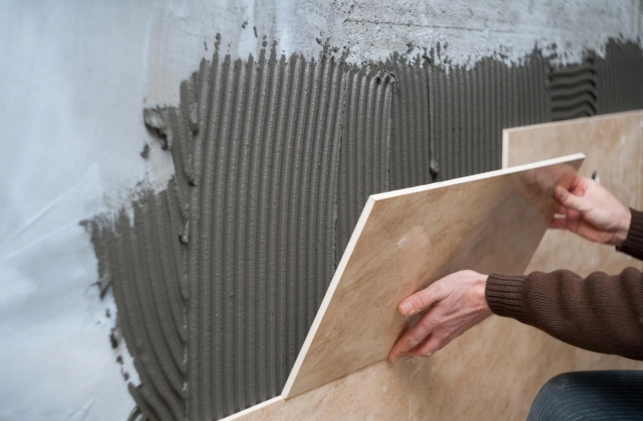
When dealing with tile adhesive, the primary goals include tensile adhesion, open time, and slip resistance. Workability and the ability to withstand slight substrate shifts are also vital. A rigid grade might perfectly match standard cement-based tile adhesive. Conversely, a flexible grade could be superior for massive tiles, tricky substrates, or environments facing temperature swings.
Type 312 serves as a highly practical starting point for rigid cement-based tile adhesive and self-leveling systems. You might consider Type 215 or similar flexible options when the client requires extra movement tolerance.
Regarding grout, the focus might shift toward cohesion, water retention, and crack control. A smooth surface finish is also highly desired. A semi-flexible grade can prove beneficial when the grout needs to stay robust without turning overly brittle.
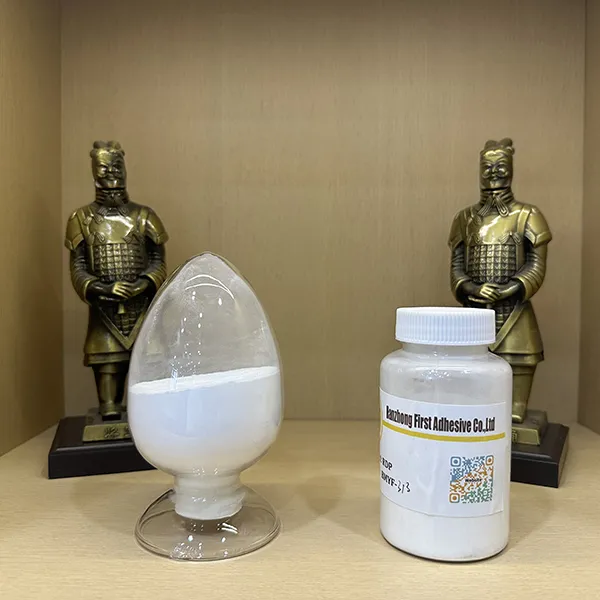
One specific product example is RDP Type 313 for dry-mix mortar. It is carefully positioned to deliver great adhesion, flexibility, and open time. It also provides excellent anti-sag performance and workability.
Wall putty, skim coat, and repair mortar
Wall putty requires a very smooth application, solid adhesion, and strong surface cohesion. It must also resist powdering. Any VAE powder used for wall putty must blend well with cellulose ether and mineral fillers. It should also match the chosen water level.
Flexible grades like Type 215 can assist in boosting crack tolerance and the overall surface feel. Certain buyers might favor a grade offering tougher cohesion and nice finishing traits. They might prefer this over an extremely high flexibility level.
Repair mortar carries a totally different risk profile. It has to bond firmly to an existing substrate. Workers often apply it in a fairly thin layer. The chosen RDP must boost adhesion and lower the chance of brittle failure. However, it should not render the repair mortar far too soft.
Waterproof mortar and ETICS
You should evaluate RDP grades for waterproof mortar based on film formation and flexibility. Adhesion after moisture exposure and crack control are also essential metrics. High-flexibility grades usually fit this segment much better than rigid ones.
ETICS and exterior insulation systems demand a very careful balance. They need bonding strength, flexibility, weather resistance, and smooth workability. You can look at grades like 7050, 7060, and 7080 for insulation mortar and reinforcement-layer setups. Naturally, this depends on proper formula testing.
This specific segment is drawing more attention lately. Building owners and contractors actively seek superior thermal performance and reduced cooling costs. For distributors, ETICS products can build a highly profitable, high-performance category right next to standard tile adhesive.
Self-leveling and gypsum mortar
Self-leveling mortar demands excellent flow, surface smoothness, and quick early strength. It also requires precise air control. You might consider Type 312 and specific flexible grades. The right choice depends entirely on the binder and the PCE system.
Gypsum mortar requires a distinctly different mix of properties. The RDP must supply good cohesion and high surface quality. At the same time, it must stay compatible with gypsum retarder, HPMC, defoamer, and various other additives. Controlling the setting time is also crucial. Hot weather can drastically shrink the working window.
Distributors who supply gypsum factories must review the RDP alongside the entire formulation. A powder that performs wonderfully in cement mortar might fail to deliver the same outcome in gypsum plaster. The same applies to gypsum-based self-leveling products.
Do not ignore the supporting additives
RDP represents just one piece of a dry-mix mortar formula. The ultimate result also relies heavily on water retention, air control, and flow. Setting time and crack management play massive roles too.
Buyers looking to buy hydroxyethylcellulose might also use the shorter term hydroxyethy when they compare cellulose products. The main technical question is whether the cellulose ether delivers adequate water retention and proper rheology alongside the chosen RDP.
This exact logic applies to defoamer powder. Distributors evaluating cement mortar defoamer wholesalers must ask a vital question. Does the product manage air without ruining the surface look or dropping adhesion? In certain formulas, a cement mortar system organic silicon defoamer can be quite helpful. However, the final call must always stem from real application trials.
Regarding flow-sensitive goods, a polycarboxylate superplasticizer powder company might offer various grades. These could target self-leveling mortar, cement grout, or gypsum applications. A superplasticizer for gypsum factory needs rigorous testing. You must check it against the gypsum type, filler, retarder, HPMC, and RDP. Similarly, pce for cement grouting demands close attention to flow retention, water reduction, and overall strength development.
At BING MA YONG PAI®, we actively help buyers review these additives as one complete system. Our PCE product range features powder grades for flowing mortar and cement grout. It also covers self-leveling systems and gypsum-based goods.
We also back customers who require customized polycarboxylate polymer powder. Sometimes they need a broader package containing pp fiber, HPMC, defoamer, gypsum retarder, and other construction additives. You can review our defoamer category whenever air control becomes a formulation hurdle for the buyer.
What Middle East distributors should verify before stocking
Distributors must request more than just a simple price list before adding a VAE powder grade to their regular inventory. A brief technical review can easily prevent highly expensive product substitution disasters.
Make sure to check the following points:
The polymer base and the exact flexibility level.
The fully recommended mortar applications.
The TDS, COA, and MSDS documents for that specific grade.
The suggested dosage amounts and the provided sample quantity.
The moisture limits, bulk density, and required storage conditions.
The overall compatibility with HPMC, PCE, defoamer, fiber, and gypsum retarder.
The available packaging options. These might include 25 kg bags, jumbo bags, blank bags, or OEM bags.
The factory’s batch traceability and their retained-sample policy.
The availability of technical support for local customer trials.
At BING MA YONG PAI®, we supply excellent RDP grades for tile adhesive, wall putty, and waterproof mortar. We also cover ETICS, self-leveling mortar, repair mortar, and gypsum-based products. We gladly work with buyers on samples, formulation testing, and OEM packaging. We also assist with product selection based on their local raw materials.
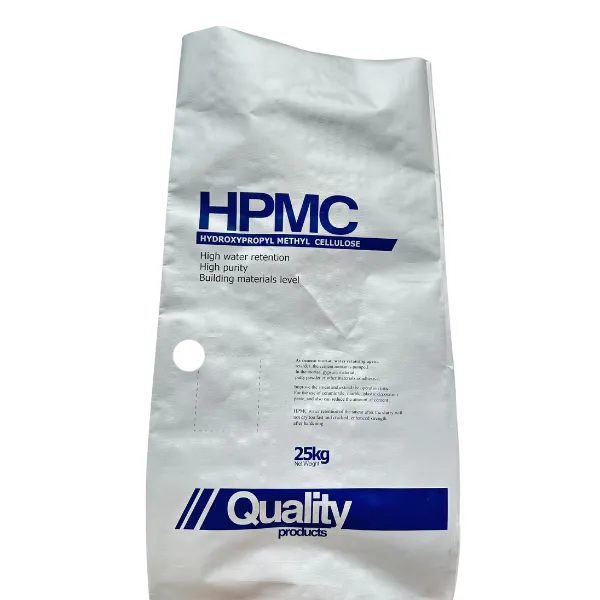
You can consider our HPMC and cellulose category alongside RDP when the buyer demands stronger water retention and smoother workability. For distributors focusing on gypsum, our gypsum retarder range can easily support a much broader product program.
Conclusion
The ideal VAE powder grades for Middle East distributors rely heavily on the specific mortar segment, climate, and substrate. The performance target also matters. Rigid grades can promote strong bonding in tile adhesive and self-leveling systems. Flexible grades fit much better into wall putty, repair mortar, and movement-sensitive tasks. High-flexibility grades demand serious attention in waterproof mortar and exterior setups. Gypsum products need strict compatibility with retarder, HPMC, defoamer, and flow-control additives. For distributors, the strongest product range is rarely the biggest one. Instead, it is the range that you can explain clearly and test locally. You must also be able to store it safely and support it with dependable technical service.
FAQs
Q: Which VAE powder grades suit Middle East distributors best?
A: You should select grades based on the specific tile adhesive, waterproof mortar, or wall putty requirements. ETICS, flooring, and gypsum demands also dictate the right choice.
Q: What is the standard RDP package size?
A: The standard packaging format is 25 kg per bag. However, jumbo bags and OEM packaging options are fully available too.
Q: Should distributors test every VAE powder grade?
A: Yes, absolutely. You must test each grade using the buyer’s own cement, filler, additives, and water. You should also replicate their local mixing process.