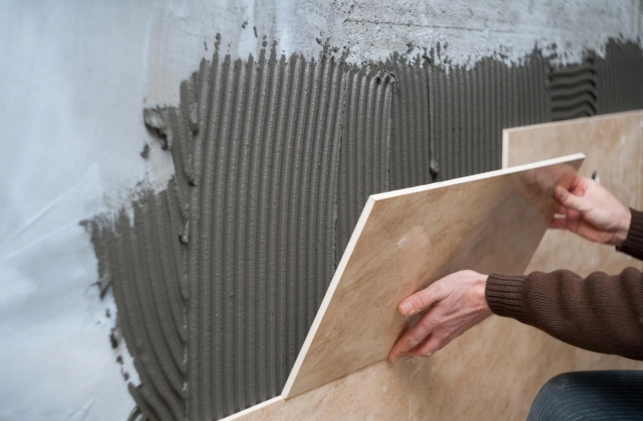
Tile adhesive is no longer judged only by whether it sticks on the first day. Buyers now ask for longer open time, better slip control, stronger adhesion after water exposure, and safer performance on low-absorption porcelain tiles. Large-format tiles, fast renovation work, thinner adhesive beds, and higher expectations for durable interiors all raise the bar. This is where redispersible polymer powder for tile adhesive becomes a key part of the formula. At BING MA YONG PAI®, we see this need in tile adhesive projects that require stable application and field strength.
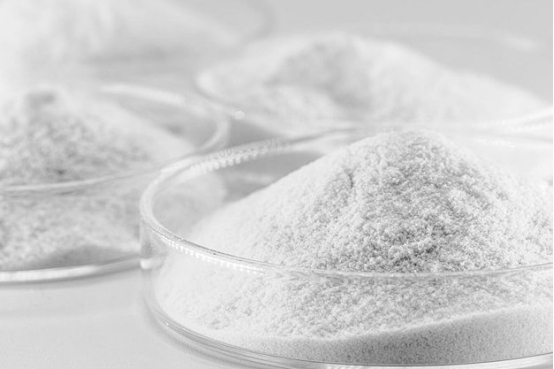
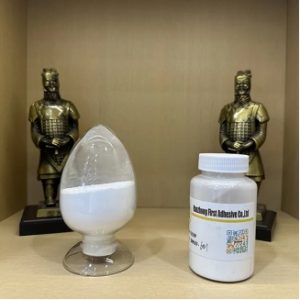
RDP is a spray-dried polymer powder that disperses again when water is mixed into dry mortar. As the adhesive cures, polymer particles form a film within the cement matrix. This film helps improve bond strength, flexibility, cohesion, water resistance, impact resistance, and workability. For C1 through C2TES2 targets, the right RDP grade helps connect fresh application behavior with hardened performance.
Why Tile Adhesive Standards Drive RDP Selection
C1 and C2 describe cementitious tile adhesive strength levels, while letters such as T, E, S1, and S2 point to anti-slip behavior, extended open time, and deformability. These targets matter because tile jobs face different stresses. A small indoor ceramic tile and a large porcelain slab on a warm exterior wall do not ask the adhesive to do the same work.
From C1 Bonding to C2TES2 Requirements
For a basic C1 adhesive, the formulation usually needs dependable tensile adhesion and steady workability. A C2 adhesive requires a stronger bond, often after water immersion, heat aging, or freeze-thaw exposure. When T is added, sag resistance becomes important. E calls for longer open time. S1 and S2 require deformability, so the adhesive must absorb movement without breaking its bond.
Redispersible polymer powder supports this path by building a flexible polymer phase inside the cement system. It can improve adhesion to tile backs and mineral substrates, reduce brittleness, and help the mortar hold together during drying shrinkage or thermal movement. It does not work alone, but it often decides whether the formula has enough strength and flexibility to reach higher performance classes.
Material Features That Matter in Tile Adhesive
A good RDP choice starts with the material itself. Polymer base, glass transition behavior, minimum film-forming temperature, particle size, solids content, ash content, redispersion quality, and compatibility with cement all influence the result. Buyers should review these data together with field needs, because a high-strength grade and a high-flexibility grade may solve different problems.
Adhesion, Flexibility, and Water Resistance
Adhesion is the first concern. RDP improves contact between the adhesive, the substrate, and the tile back. This is especially important for dense porcelain tiles, smooth concrete, and renovation substrates where absorption is low or uneven. A stronger polymer film can reduce hollow spots and help the adhesive keep its bond after moisture exposure.
Flexibility comes next. C2TES1 and C2TES2 tile adhesives need more than strength; they need controlled deformation. A suitable flexible tile adhesive polymer allows small movement from substrate expansion, vibration, temperature change, or drying shrinkage. Water resistance also matters because bathrooms, kitchens, balconies, and exterior areas face repeated moisture cycles.
- For C1: focus on reliable adhesion,good workability, and cost control.
- For C2: focus on strongeradhesion, excellent workability.
- For T: balance RDP with cellulose ether for anti-slip control.
- For E: keep enough open time without slowing strength gain too much.
- For S1/S2: select flexible grades that support deformability and crack resistance.
Product Types for Different Performance Targets
Not every RDP powder should be used for the same adhesive. Rigid or hard grades can support adhesion, impact resistance, and early structure. Semi-flexible grades give a middle balance between strength and movement tolerance. Flexible and high-flexibility grades are better suited to higher deformability, exterior exposure, or demanding tile systems.
Matching Grades to Real Formulations
For standard tile adhesive, buyers may begin with grades that support adhesion and construction workability. For higher C2 or C2TE performance, the formula may need stronger polymer modification and more careful water control. For C2TES1 or C2TES2, flexibility becomes central. The RDP must be tested with the chosen cement, sand, cellulose ether, water reducer, and defoamer.
At BING MA YONG PAI®, our RDP product range includes grades for tile adhesive, wall putty, waterproof mortar, ETICS, self-leveling mortar, repair mortar, and gypsum-based products. For tile adhesive, commonly recommended directions include Type 312, Type 214, Type 7050, Type 7060, Type 7080, and Type 9220, depending on the target system.
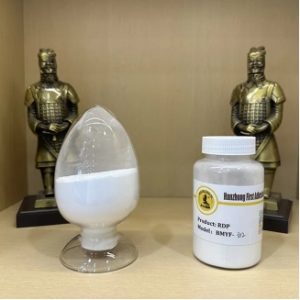
For example, RDP Type 312 is described for cement mortar additives and applications such as ceramic tile adhesive, insulation mortar, masonry mortar, repair mortar, and interface agents. RDP Type 215 is a flexible dry mortar additive used where adhesion and flexibility need to work together.
How the Full Additive System Supports C2TES2
Tile adhesive performance comes from the whole dry-mix system. RDP forms the polymer film, cement builds mineral strength, sand controls skeleton and shrinkage, cellulose ether shapes water retention and slip resistance, PCE changes flow and water demand, and defoamer powder helps reduce trapped air. If one part is changed, the rest of the formula may also shift.
Compatibility with Cellulose, PCE, and Defoamers
Many buyers search for buy hydroxyethylcellulose or shorten the term to hydroxyethy when comparing water-retention choices. In tile adhesive, HPMC or HEC can support open time and anti-slip behavior, but too much viscosity may reduce wetting. That is why the cellulose ether must be tested with the selected RDP rather than chosen from a viscosity number alone.
PCE can reduce water demand and improve flow in some cement mortar systems. A polycarboxylate superplasticizer powder company should provide guidance on water reduction and compatibility. Search terms such as pce for cement grouting or customized polycarboxylate polymer powder often relate to flow-sensitive products, but the same principle applies to tile adhesive trials. Our PCE polycarboxylate superplasticizer range can be reviewed when water demand or flow retention must be adjusted.
Air control is another quiet but important detail. Buyers who work with cement mortar defoamer wholesalers should check whether the chosen defoamer powder works with the polymer and cellulose package. A cement mortar system organic silicon defoamer can help reduce pinholes and excess air, but overdosing may change workability. PP fiber may also be used in some mortar systems for crack control.
Main Application Industries and Buyer Priorities
Redispersible polymer powder for tile adhesive is used by dry-mix mortar plants, tile adhesive brands, building material distributors, project contractors, renovation product suppliers, and technical service teams. The strongest demand often comes from areas where builders use dense porcelain tiles, large-format tiles, exterior insulation systems, wet rooms, balconies, and fast interior renovation.
BING MA YONG PAI® works with customers on application testing, formula adjustment, OEM packaging, and batch control. We also supply related products such as HPMC and cellulose additives, PCE, defoamer, gypsum retarder, and other construction additives. For gypsum-related factories, including teams looking for superplasticizer for gypsum factory needs, compatibility between PCE, retarder, RDP, water-retaining agent, and defoamer should always be checked.
Buyer Checklist Before Scaling Production
Before moving from sample testing to regular orders, buyers should compare the same formula under the same curing age, water level, tile type, and substrate. C1 through C2TES2 targets cannot be confirmed only by a supplier claim. They need repeatable testing, careful records, and a clear view of the final job conditions.
- Ask for TDS, COA, MSDS, and recommended dosage guidance.
- Test adhesion before and after water immersion, heat aging, and open time exposure.
- Check sag resistance with the real tile size and adhesive bed thickness.
- Compare deformability when aiming for S1 or S2 performance.
- Confirm packaging, storage conditions, batch traceability, and sample retention.
- Run pilot production before changing a proven commercial formula.
Conclusion
Redispersible polymer powder for tile adhesive helps bridge the gap between a basic C1 adhesive and higher C2TES2 performance targets. It supports adhesion, flexible deformation, cohesion, moisture resistance, and stress control when the full formula is balanced. The best result does not come from adding more powder blindly. It comes from matching RDP type with cement, sand, cellulose ether, PCE, defoamer powder, tile type, substrate, and curing condition. For buyers, the most useful partner provides data, samples, testing, and stable supply.
FAQs
Q: Can redispersible polymer powder for tile adhesive support C2TES2?
A: Yes, with the right flexible grade, dosage, and full formula testing.
Q: What is the standard RDP package size?
A: Standard packaging is 25 kg/bag; jumbo bags are available.
Q: How much sample is useful for lab testing?
A: Initial samples are commonly 200 g-500 g; larger trials may use 1000 g.