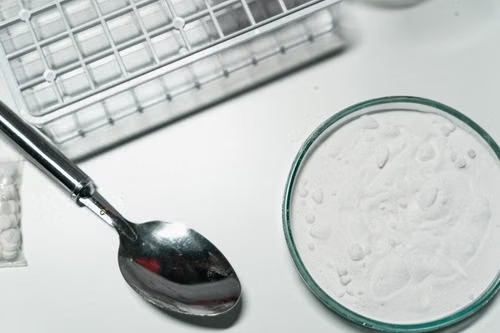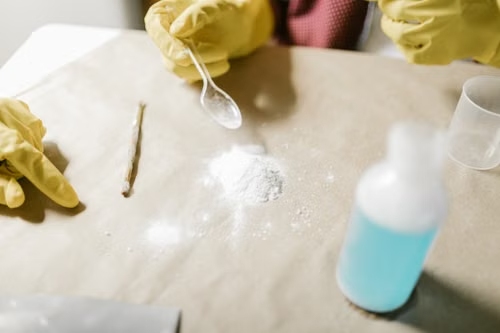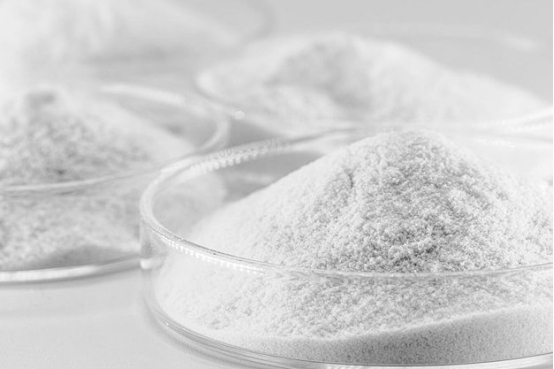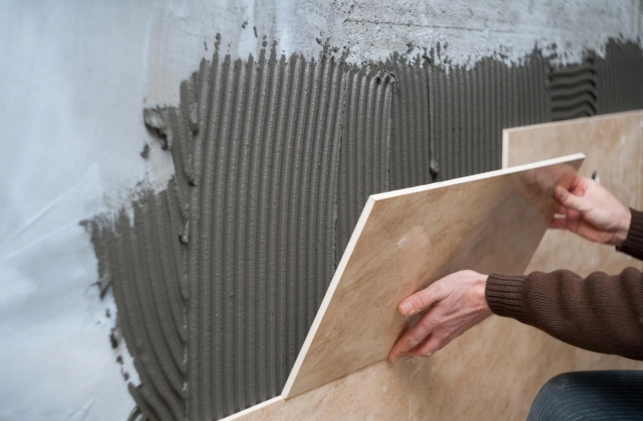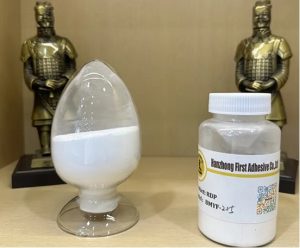
When dry-mix mortar must bond strongly, resist cracking, and perform in damp conditions, one additive often becomes central to the formulation: RDP redispersible polymer powder. This spray-dried polymer powder disperses again when mixed with water, forming a polymer film throughout the hardened mortar.
The result is more than improved adhesion. A suitable RDP grade can also support flexibility, water resistance, workability, impact resistance, and long-term durability. These benefits matter in tile adhesive, waterproof mortar, wall putty, external insulation systems, repair mortar, self-leveling compounds, and gypsum-based products.
At BING MA YONG PAI®, we develop RDP grades for different mortar requirements rather than treating every application as the same. Our product range includes rigid, semi-flexible, flexible, and highly flexible options for different formulation targets.
Why RDP matters in modern dry-mix mortar
Construction material buyers are now paying closer attention to service life, material efficiency, climate resistance, and consistent performance. Recent industry reports also highlight the need for more durable, energy-efficient, and resilient building materials. For dry-mix mortar producers, this means additives must support performance without creating unnecessary formulation complexity.
Strong adhesion without a brittle mortar
Cement and gypsum binders provide strength, but they may not bond equally well to every substrate. Low-absorption tiles, smooth concrete, insulation boards, and old surfaces can all create bonding challenges.
After hydration and drying, RDP forms a polymer film around mineral particles. This film improves cohesion inside the mortar and helps the mortar maintain contact with the substrate. It can support:
- Higher tensile adhesion
- Better cohesion between binder and aggregate
- Improved bonding to difficult surfaces
- Lower risk of debonding after drying
- Better resistance to vibration and minor movement
For tile adhesive, adhesion is not only about the initial bond. The mortar must continue to hold the tile when temperature, moisture, and substrate movement place stress on the interface.
Flexibility that helps control cracking
A rigid mortar may perform well under compression but fail when the substrate expands, contracts, or moves slightly. This is especially important in external walls, tile systems, repair areas, and flexible waterproofing layers.
Flexible redispersible polymer powder introduces a degree of elasticity into the cured mortar. Instead of transferring every movement directly into a brittle cement structure, the polymer phase can absorb and distribute part of the stress.
This helps improve:
- Flexural strength
- Crack resistance
- Impact resistance
- Freeze-thaw performance
- Resistance to shrinkage-related defects
- Durability under repeated movement
The correct grade depends on the application. A tile adhesive may need a balance between rigidity and flexibility, while a waterproof mortar or repair mortar may require a more elastic polymer system.
Water resistance without losing workability
Water resistance is another important function of RDP. The polymer film can reduce capillary water absorption and improve the hydrophobic character of the mortar. It does not make every mortar completely waterproof by itself, but it can strengthen the overall water-resistance system.
In practical applications, RDP may help mortar:
- Absorb less water
- Resist moisture penetration
- Maintain adhesion in damp areas
- Reduce surface powdering
- Improve durability in exterior conditions
This is why RDP is widely used in waterproof mortar, bathroom renovation materials, basement repair systems, exterior wall products, and other applications exposed to moisture.
How RDP balances three different performance goals
Adhesion, flexibility, and water resistance are connected, but they are not identical. Increasing one property does not automatically improve the others. The balance depends on polymer chemistry, glass transition temperature, minimum film-forming temperature, dosage, cement type, aggregate grading, and the other additives in the formula.
Polymer chemistry and grade selection
RDP products may use different polymer bases and protective colloids. These differences influence film formation, flexibility, adhesion, water resistance, and compatibility with cement or gypsum.
A more rigid grade can support strong bonding and surface hardness. A flexible grade may be more suitable for systems exposed to movement or thermal change. Highly flexible grades are often considered for waterproofing membranes, elastic mortars, and high-performance repair products.
BING MA YONG PAI® offers multiple RDP grades for tile adhesive, wall putty, self-leveling mortar, waterproof mortar, insulation mortar, decorative mortar, and gypsum-based mortar. The correct choice should be based on the final mortar performance, not only on the powder price.
Dosage and formulation balance
Too little RDP may not provide enough polymer film to improve the mortar. Too much may increase cost, affect setting time, or change the balance between strength and flexibility.
The best dosage is influenced by:
- Cement or gypsum content
- Aggregate type and particle size
- Water-to-binder ratio
- Desired flexibility
- Required adhesion class
- Moisture exposure
- Mixing and curing conditions
- Other additives in the formula
Laboratory testing remains important. A formulation that works well with one cement, sand, or gypsum source may behave differently with another. This is particularly important when raw material quality changes between regions or production batches.
Compatibility with supporting additives
RDP rarely works alone. HPMC can help with water retention, open time, sag resistance, and workability. PCE can improve flow and reduce water demand in suitable systems. A defoamer powder can help control unwanted air bubbles and surface pinholes.
For buyers searching for terms such as “buy hydroxyethylcellulose” or “hydroxyethy cellulose,” it is useful to compare the complete additive system rather than selecting one ingredient in isolation. The same principle applies to pp fiber, which may be used in selected crack-control and reinforcement systems.
Our HPMC hydroxy propyl methyl cellulose can be considered alongside RDP when the formulation needs improved water retention and construction feel.
Product categories and common applications
Different mortar systems place different demands on RDP. A product suitable for rigid tile adhesive may not be the best choice for waterproof mortar or gypsum plaster. Application-based selection makes the final product easier to control.
RDP for tile adhesive and tile grout
Tile adhesive needs strong bonding, good open time, smooth troweling, and resistance to sagging. RDP can improve adhesion to ceramic tiles, stone, cement boards, and other substrates.
For flexible tile adhesive, the polymer must also help the mortar absorb small movements without losing contact. In tile grout, RDP may improve cohesion, surface durability, flexibility, and resistance to moisture-related damage.
RDP for wall putty, skim coat, and repair mortar
Wall putty and skim coat require a smooth finish, good adhesion, easy application, and resistance to powdering. RDP can improve the bond between the coating and the wall while supporting better crack resistance.
Repair mortar has a similar need for adhesion, but it may also face impact, shrinkage, and substrate movement. A suitable flexible redispersible polymer powder can help the repair layer remain integrated with the existing surface.
RDP for waterproof mortar, ETICS, and self-leveling systems
Waterproof mortar requires a combination of adhesion, flexibility, low water absorption, and durability. ETICS systems also need reliable bonding between insulation layers, base coats, and protective layers.
Self-leveling mortar has a different priority: flow, surface quality, early strength, and controlled air content. RDP may be used together with PCE, HPMC, and defoamer to create a smoother and more stable system.
For related sourcing, our PCE polycarboxylate superplasticizer products support fluidity and water reduction in suitable cement-based systems. Buyers comparing a polycarboxylate superplasticizer powder company, pce for cement grouting manufacturers, china polycarboxylate polymer powder customized, or china pce for cement grouting wholesale should request application data, not only a price list.
Choosing RDP for a reliable formulation
A good purchasing decision should begin with the final application. Ask what the mortar must do after curing, what raw materials are available, and which performance problems need to be solved.
Check the following points:
- Required adhesion and flexural strength
- Expected moisture and temperature exposure
- Desired flexibility and crack resistance
- Cement, gypsum, sand, and filler characteristics
- Compatibility with HPMC, PCE, and defoamer
- Recommended dosage range
- Storage temperature and moisture protection
- Technical support and sample testing
- Batch consistency and quality control
Air control also deserves attention. Excessive foam can create pinholes, weak spots, and surface defects. A suitable defoamer powder may help, while cement mortar defoamer wholesalers should still verify performance in the complete formula.
Gypsum systems need a different balance again. RDP can support adhesion and flexibility, while a gypsum retarder can extend working time and reduce the risk of sudden setting. In our gypsum applications, the retarder dosage must be confirmed through laboratory testing because gypsum quality, temperature, and formulation design all affect setting time.
At BING MA YONG PAI®, we provide samples, technical data, customized grades, and formulation support for dry-mix mortar producers. Our facility has an annual construction additive capacity of 28,000 MT and supports product development, application testing, and batch quality control.
Conclusion
RDP redispersible polymer powder balances adhesion, flexibility, and water resistance through polymer film formation inside the hardened mortar. The final result depends on the polymer grade, dosage, binder system, raw materials, curing conditions, and compatibility with supporting additives. A rigid grade may suit strong bonding, while a flexible or highly flexible grade may better fit waterproof mortar, repair mortar, ETICS, or movement-sensitive applications. For reliable results, producers should test RDP in the complete formula instead of judging it by price alone. With the right grade and technical support, RDP can help dry-mix mortar achieve better workability, crack resistance, durability, and long-term performance.
FAQs
Q: What is RDP redispersible polymer powder used for?
A: It improves adhesion, flexibility, water resistance, durability, and workability in dry-mix mortar.
Q: How much RDP should be added?
A: The dosage depends on the mortar system and should be confirmed through laboratory testing.
Q: Can BING MA YONG PAI® provide customized RDP?
A: Yes. We provide customized grades, technical support, samples, and 25 kg packaging options.