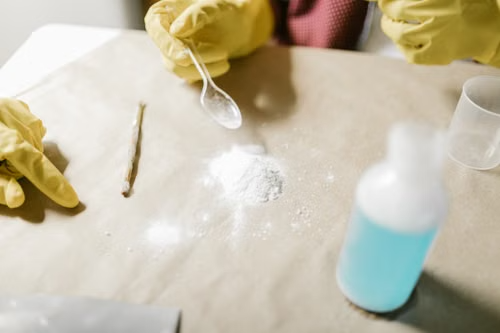
Priced low in a bag, redispersible polymer powder does not translate to low cost of mortar. You never know how much powder a subsequent order will contain. It can even increase the amount of water required. And if the mix fails to meet required standards, all that initial savings can be lost in a heartbeat as batches are rejected one after another.
Buying by weight in kg is too simplistic. The cost of mortar has to include the true cost of making it and deliver the agreed performances every time.
In this guide we explain how to properly calculate the redispersible polymer powder cost. The comparison of different grades, the proper dosage, the different shipping terms as well as the different production runs has to be linked to the specific application first and then to the supplier’s quote with clear and measurable results.
Compare Grades Before Comparing Prices
First specify the end-use of the finished mortar to receive quotes, as a number of materials are required for various applications such as tile adhesives, waterproofing mortars, wall putties and self-leveling mixes, which demand different types of polymers. Once the correct powders have been specified for the intended end-use, the quoted materials must also meet identical performance test criteria within your specific formula.
Match Material Characteristics to the Mortar Segment
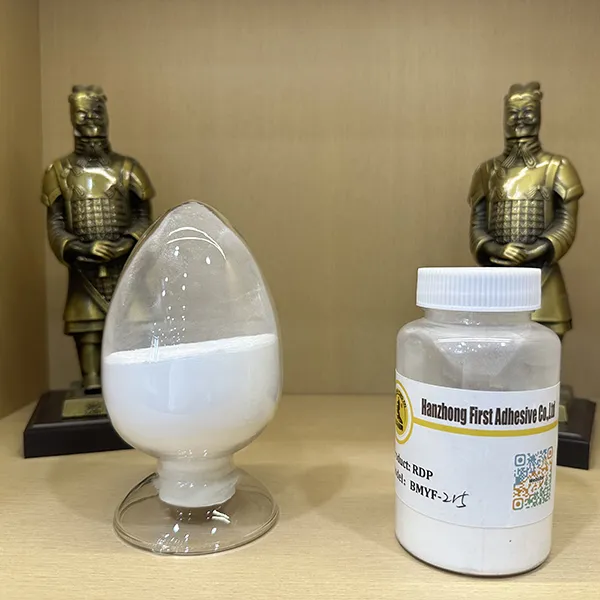
RDP is a dry polymer powder. It easily redistributes when mixed with water. As the wet mortar dries, these spread-out polymer particles create a film. This film adds adhesion, internal cohesion, flexibility, and crack resistance. However, water resistance is never automatic. It relies heavily on the specific chemistry and your entire mix design.
Differentiate between suppliers’ technical polymerization formulas and marketing buzzwords like ‘rigid’, ‘flexible’ or ‘high-flexibility’. Although terms such as these enable you to create a shortlist of possible suppliers in a jiffy, laboratory test data remains irreplaceable.
These can form the basis of your technical application brief.
Early strength of tile adhesive, wet-conditioned adhesion, open time, slip resistance, deformation limits.
Waterproof mortar: Water exposure expected, strong adhesion, flexibility and strict crack-bridging required.
Wall putty and skim coat: surface cohesion, smooth application feel, bonding, and easy sanding behavior.
Self-leveling and repair mortar: proper flow, strong bonding, smooth surface development and good strength increase over time.
Basic substrate compatibility and good workability of insulation and gypsum systems and all durability targets for them.
At BING MA YONG PAI®, our RDP product range acts as a core part of our additive supply for these dry-mix mortar and gypsum applications.
Calculate Cost per Tonne of Accepted Mortar
When comparing products for a given application, compare the amount needed to achieve the same results as well as the cost of that product. The amount of powder in two different forms can vary greatly and the rate of addition to achieve the same results can be quite different. Be sure to include the cost of shipping and handling in your calculations. Keep your math simple and focus on the cost of the end product that will be sold as accepted, quality production.
Use a Transparent Dosage Calculation
A highly practical starting formula is:
RDP cost per tonne of dry mortar = delivered price per kg * RDP dosage in kg per tonne.
Please find below a trial setup which is NOT a current market quote:
| Comparison | Powder A | Powder B |
|---|---|---|
| Delivered price | $1.45/kg | $1.60/kg |
| Tested dosage | 15 kg/tonne | 13 kg/tonne |
| RDP cost in finished mortar | $21.75/tonne | $20.80/tonne |
Although Powder B starts out with a higher up front cost to buy, it actually results in a lower total cost of the additive when considered with the assumed usage rates in this example.
The above is valid only when both alternatives have been checked through identical laboratory tests. The fact that a high-end formula is available does not automatically allow for a reduction in dosage. The appropriate workable amount must be determined through tests. These must include water exposure and simulate aging under relevant conditions.
After that, you must add the daily costs your plant truly faces. These include screening losses, routine laboratory checks, torn bags, rejected production runs, and factory rework. You should avoid guessing a random percentage for “quality risk.” Always use real factory records whenever you can.
Check Whether Batch Results Stay Close
A great initial sample merely gives you a starting point. It does not prove a reliable supply history. You should request material from several different production lots before you sign a large bulk contract. Test those various lots under strictly controlled conditions. Next, compare the spread of those results against your own factory acceptance limits. This step clearly shows if the quoted grade is truly safe for continuous daily production.
Read the COA Alongside Application Results
A proper Certificate of Analysis must contain information on the grade delivered, lot number, actual test results and the strict limits of the required specifications. Also, ask for the exact test methods, as test numbers obtained from different preparation methods or with different test equipment are completely meaningless.
Your standard comparison checklist can include:
General moisture levels and any caking issues.
Bulk density values and overall powder handling ease.
Total ash content. Check this against the grade specification for your official use.
Daily redispersion tested in a fixed and repeatable setup.
The fresh-mortar water demand and related application properties.
Hardened-mortar adhesion strength and other specific application results.
Low ash content does not automatically translate into high quality. A product can also appear bright white but perform poorly in actual use.
Cement, filler, sand, water and all auxiliary additives must remain unchanged for comparative tests. The test environment for mixing and curing must also remain unchanged. Any small deviation from the test required by a new lot of material must be recorded and included in the cost assessment for that fix.
This is the process that you agree with your supplier to follow in the event that material fails against any of the specification requirements. This can involve an investigation, retest as soon as possible, replacement as soon as possible or other action as set out in writing.
Evaluate the Whole Additive Package
Check if another ingredient has shifted before blaming the RDP for a sudden formula problem.
A factory team planning to buy hydroxyethylcellulose must name the exact cellulose type and the required test method. A partial name like “hydroxyethy” is never enough for a formal purchase order. You should never treat HEC and HPMC as simple drop-in replacements without running thorough formulation trials first.
You can review our HPMC and cellulose product category alongside the RDP options. This helps when you are building a complete, reliable purchasing specification.
For defoamer powder, you must compare the working dosage and the final mortar results instead of the simple bag price. You should ask for solid proof from a formula that matches yours when you review cement mortar defoamer wholesalers. A quote labeled as “cement mortar system organic silicon defoamer” is too vague. It still requires a precise grade name, a detailed technical data sheet, and a full compatibility trial.
The defoamer range acts as another useful category inside our broad mortar-additive offering.
You must apply this exact same strict discipline when you assess a polycarboxylate superplasticizer powder company. For pce for cement grouting, you need to clearly state the flow, slump retention, bleeding limits, and final strength targets. Any requests for customized polycarboxylate polymer powder must list highly measurable acceptance rules. They should also state how future repeat orders will be tested.
Similarly, an inquiry titled “superplasticizer for gypsum factory” requires more details. It needs the specific gypsum type, the exact working-time target, and a list of all other active additives. You should review the PCE product range against those unique needs. Do not assume that one single grade will perfectly suit every binder type.
If pp fiber is part of the mix, you must record its physical dimensions and the exact dosage. You also need to note the specific dispersion steps used during your comparative trials.
Put Delivery Conditions into the Comparison
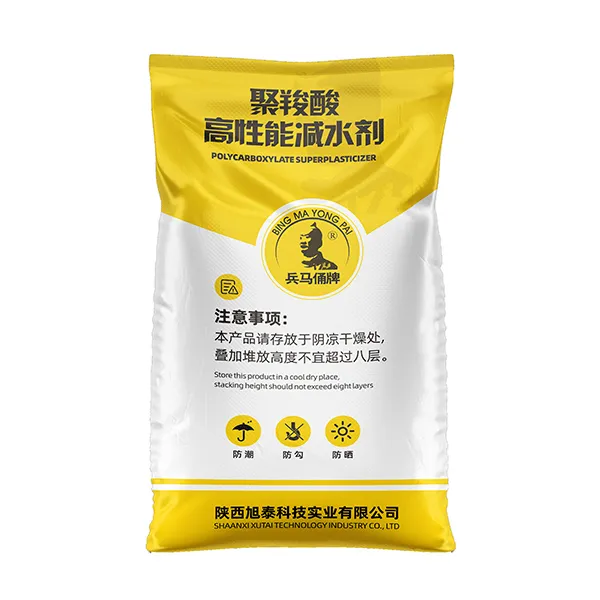
A technically perfect powder still requires a highly practical supply agreement. You should ask each shortlisted supplier to quote based on the exact same delivery terms. They must clearly state:
The true net product weight, the bag construction details, and the exact pallet layout.
Freight costs, transit insurance, and any other hidden fees.
The official shelf life and the strictly specified storage conditions.
The actual production date and the remaining usable shelf life at the time of dispatch.
The standard factory lead time, the minimum order quantity, and the expected delivery schedule.
The formal rules for handling damaged bags and filing quality complaints.
You should always compare the actual usable material. Do not just look at the nominal shipment weight. You must also separate bulk density from true mass. For example, a container holding 1 L of dry powder does not automatically weigh 1 kg.
You must confirm a few things before you approve a massive shipment. Ensure that your plant’s receiving, storage, and dosing setups fully match the supplier’s written guidelines.
Connect Procurement to Current Industry Priorities
Recent talks about energy efficiency give smart buyers another reason to look past the basic additive price. A major 2025 global energy review pointed to rising cooling demand as a big driver of electricity use. Meanwhile, the 2024/2025 buildings-and-construction assessment keeps environmental performance in the spotlight. These are broad industry concerns. They are not direct proof that one specific RDP grade is more sustainable than a rival option.
For a procurement team, the best response is to demand hard evidence. A supplier might claim lower waste, a reduced dosage, or greatly improved durability. If they do, you must ask exactly what was measured. You also need to know the exact test conditions.
You should never assume an environmental benefit based on polymer content alone. Instead, compare the equivalent finished-mortar performance. You must carefully document any real changes in factory rejection rates, material consumption, or long-term service needs.
Make Technical Support Part of Supplier Approval
A reliable supplier should clearly explain how a suggested grade fits into your specific formula. They must also detail how future bulk shipments will be checked against the original approved sample.
You should ask about their retained-sample policies and full lot traceability. Request their change-notification rules and ask for on-site support during a factory trial. You must agree on whether a sudden chemistry or manufacturing change requires your written approval before the next delivery.
At BING MA YONG PAI®, we actively support your grade evaluation process. We provide test samples, deep technical documentation, and customized formulation advice. We also offer gypsum retarders alongside our other essential construction additives.
You should treat this technical support as a vital factor to grade during the supplier qualification phase. It is not just a polite promise printed on a sales quote.
Conclusion
Comparing redispersible polymer powder cost always begins with a very clear application target. It ends with stable, repeatable factory production. You must match the correct grade to the specific mortar type. Next, establish its proven tested dosage. Then, calculate the true delivered additive cost per tonne of accepted, usable product. After that, you need to examine several production batches instead of just one lucky sample. Factors like moisture, powder handling, redispersion, and final application results need your full attention. Packaging and storage rules are equally important. You must also evaluate the supporting additives and the supplier’s helpfulness when a test result suddenly shifts. A higher-priced powder is never automatically better. At the same time, a cheaper powder does not always mean poor value. The absolute best purchasing decision relies on fair, comparable tests. It requires documented acceptance limits and fully traceable deliveries. Finally, it demands a transparent cost calculation that your own factory team can easily verify.
FAQs
Q: How should buyers compare redispersible polymer powder cost?
A: Buyers should carefully compare the final delivered price and the strictly tested dosage. They must also track batch variation and factory rejection costs per tonne of accepted, sellable mortar.
Q: How much RDP is needed for 1,000 kg of dry mortar?
A: You must use the exact dosage proven by your own physical application trials. There is absolutely no universal or magic amount that works for every single grade and mortar type.
Q: Does a 25 kg sample batch prove supply consistency?
A: No, it does not. You need to test and compare several different production lots under identical lab conditions. Only then should you approve regular, ongoing bulk deliveries.