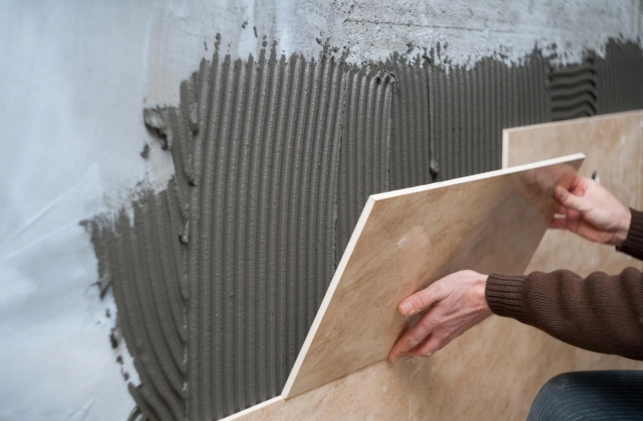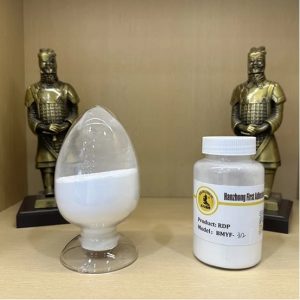
The redispersible polymer powder market is growing quickly. Builders increasingly need dry-mix products that are easy to transport, mix fast, and maintain strong performance in tough weather conditions. In the Middle East, this growth links directly to housing, infrastructure projects, building upgrades, and exterior insulation systems. Meanwhile, in South America, the demand is rising for tile adhesives, wall finishes, waterproof mortars, repair systems, and locally made ready-mixed mortar.
This opportunity goes beyond just selling more powder. It focuses on finding the right polymer type, flexibility, water resistance, and workability for every specific job.
Why RDP Fits the Next Stage of Regional Construction
RDP is a spray-dried polymer powder. It disperses easily again when workers add water to a dry formulation. In cement-, lime-, or gypsum-based mortar, this polymer creates a thin film as the material dries out. This film helps the mortar stick better to the substrate. It also allows the material to handle slight movements and resist damage from water, rubbing, temperature shifts, and frequent handling.
This is very important in markets where construction materials must perform better with fewer production steps. Dry-mix factories can easily add the powder during the manufacturing process. They can then pack a highly stable product and ship it to a job site where workers only need to add water. For importers and mortar producers, this powder format offers much cleaner logistics compared to liquid additives. It also makes it simpler to create multiple grades from a single supply program.
Material Features Buyers Should Compare
A helpful comparison starts with looking at the polymer base, glass transition temperature, minimum film-forming temperature, ash content, bulk density, and the specific mortar application. A rigid grade can boost adhesion and strength in a tile adhesive. On the other hand, a more flexible grade might be ideal for waterproofing, repair mortar, or any system that faces physical movement.
- Adhesion: Enhances contact with mineral substrates. It also builds much stronger bonds.
- Flexibility: Helps to absorb minor expansion, contraction, and substrate shifting.
- Water resistance: Reduces water absorption. This quality ensures a much longer service life.
- Workability: Boosts trowelability, anti-sag behavior, open time, and overall ease of application.
- Durability: Provides strong resistance to cracking, abrasion, weathering, and harsh freeze-thaw cycles.
Where the Market Is Expanding in the Middle East
The Middle East is definitely not a single, uniform market. Product choices vary greatly based on the specific climate, building type, local building standards, and construction speed. The best opportunities usually appear in large urban centers, infrastructure corridors, and major housing programs. These projects require highly reliable dry-mix performance, especially under intense heat and low humidity.
Gulf Urban Construction and Renovation
In Gulf markets, tile adhesive, tile grout, wall putty, waterproof mortar, self-leveling mortar, and repair systems serve as excellent entry points. High heat can easily reduce working time. At the same time, massive floor areas and tight installation schedules make stable open time and smooth application extremely valuable.
Therefore, RDP grades that perfectly balance adhesion, flexibility, and water resistance are highly useful for both new construction and building upgrades. They can greatly improve the bond between the tile and the substrate. They also cut down on cracking in wall finishes and help create much tougher waterproofing systems in bathrooms, basements, balconies, and outdoor areas.
Exterior Insulation and Heat-Resilient Systems
External thermal insulation composite systems, commonly called ETICS, represent another key area to monitor. This system requires a strong adhesive and base coat that bond perfectly. They must withstand severe weather exposure and function well with insulation boards and reinforcing meshes.
RDP provides the essential polymer phase for that mortar. Meanwhile, HPMC, defoamer, and other special additives help manage water retention, air release, and the overall feel during application. In very hot climates, the correct formulation can also keep the mortar workable during application and significantly lower the risk of surface flaws caused by fast drying.
Where the Market Is Expanding in South America
Demand in South America shows much more variety. The region features humid coastal cities, very dry inland zones, high-altitude climates, and fast-growing urban centers. This great diversity opens up space for multiple RDP segments instead of just one basic product.
Local mortar producers frequently need specific grades that they can adjust based on cement type, sand quality, and application thickness. They also look for a good balance between overall cost and technical performance. This situation creates great chances for suppliers who can offer both standard grades and reliable technical support for local testing.
Tile, Wall Finishing, and Waterproofing
Tile adhesive and grout continue to be massive-volume applications. They link directly with home construction, commercial interior work, and renovation projects. Using RDP for tile adhesive can greatly enhance adhesion, flexibility, open time, and resistance to shifting after the curing process.
Wall putty and skim coat demand very smooth workability, strong adhesion, and excellent crack control. Waterproof mortars require a highly flexible polymer film. This film helps block water entry while keeping a firm bond to the base structure. These specific traits are extremely vital in humid regions. In those areas, constant water exposure and frequent wet-dry cycles can quickly ruin poorly formulated mortar.
Repair, Self-Leveling, and Industrial Flooring
Repair mortar and self-leveling mortar become crucial when building projects require a very fast return to normal service. A carefully chosen RDP can help the mixture spread evenly, stick firmly, and handle physical movement after it hardens.
These advanced systems often operate alongside polycarboxylate superplasticizer, HPMC, and defoamer. Buyers might compare a polycarboxylate superplasticizer powder company with broader additive suppliers. They often do this when they seek a single technical partner for the complete dry-mix formula.
For specific grouting tasks, pce for cement grouting manufacturers might also evaluate powder grades based on flow retention, water reduction, and overall compatibility with various cement systems. The ultimate choice should always rely on careful laboratory testing rather than just the lowest price.
The Product Families That Support Regional Growth
RDP acts as the primary polymer additive. However, total commercial success usually relies on the complete surrounding formulation. A mortar producer might begin with a basic tile adhesive grade. Later, they might introduce waterproofing, self-leveling, gypsum, or repair products as the local market grows.
This is exactly why having a broad product portfolio is so important. It eliminates sourcing gaps. It also provides formulators with much more freedom to tweak performance for different applications, varying climates, and unique construction methods.
Our RDP product range features rigid, semi-flexible, flexible, and high-flexibility grades designed for various mortar needs. We also supply related categories like PCE polycarboxylate superplasticizer, defoamer powder, gypsum retarder, and top-quality cellulose additives.
RDP Grades by Application
For a practical selection, match the grade to the main performance risk of the finished product:
- Tile adhesive: Prioritize adhesion, open time, sag resistance, and suitable flexibility.
- Waterproof mortar: Prioritize film formation, water resistance, and crack control.
- ETICS and insulation mortar: Balance bonding strength, flexibility, weather resistance, and workability.
- Self-leveling mortar: Look for compatibility with flow aids and a clean, even surface.
- Gypsum-based mortar: Use compatible additives and verify setting time, strength retention, and surface quality.
Different grades can serve different formulation goals. Some are designed for stronger adhesion and general workability. Others provide higher flexibility, better water resistance, or improved weather performance for demanding exterior applications.
The Supporting Additives Around RDP
A complete dry-mix program may include HPMC or HEC for water retention and rheology, PCE for flow and water reduction, and a defoamer for air control.
Procurement teams may also search for buy hydroxyethylcellulose or compare hydroxyethy cellulose options when developing wall finishes and gypsum systems. The same buyer may ask for pp fiber, silicone hydrophobic powder, lithium carbonate, or other construction additives to complete a formula.
Gypsum applications deserve careful control. A gypsum retarder can extend working time at a low dosage and help prevent false or sudden setting. The HR01 and HR02 grades are suitable for gypsum self-leveling, plaster mortar, putty, boards, blocks, adhesives, and related products.
Their recommended dosage ranges are:
- HR01: 0.5‰ to 3.0‰
- HR02: 1.0‰ to 3.0‰
Laboratory testing is necessary to confirm the final dosage for each formula. For buyers comparing cement mortar defoamer wholesalers, compatibility between the defoamer, retarder, water-retaining agent, and polymer is just as important as the individual product price.
What Buyers Should Ask Before Choosing a Supplier
A regional buyer should look beyond a single technical data sheet. The better questions concern repeatability, application support, packaging, and delivery.
A useful supplier should be able to explain why one grade fits a mortar and how the formulation may change with local raw materials.
- Can the supplier provide samples, TDS, COA, and MSDS for the selected grade?
- Are the recommended dosage and application claims supported by laboratory testing?
- Can the supplier offer 25 kg/bag packaging, jumbo bags, neutral bags, or OEM packaging?
- Is there batch traceability and a retained sample process for quality concerns?
- Can the technical team support a local trial with the buyer’s cement, sand, gypsum, and other additives?
At BING MA YONG PAI®, we work with dry-mix mortar and gypsum producers on grade selection, application testing, OEM packaging, and customized additive solutions.
Our production and laboratory resources support a stable supply program, while our product categories cover RDP, PCE, defoamer, gypsum retarder, HPMC, cigarette adhesive, and other construction additives. We also provide sample quantities from 200 g to 500 g for initial evaluation, with larger testing quantities discussed according to the project.
For buyers building a regional supply chain, our HPMC and cellulose additive category can be reviewed alongside RDP. We also recommend checking the gypsum retarder range when the target market includes gypsum plaster, putty, boards, or self-leveling systems.
Conclusion
The redispersible polymer powder market is expanding across the Middle East and South America through practical construction needs: stronger tile bonds, more flexible waterproofing, smoother wall finishes, reliable repair mortar, and faster self-leveling work.
The best opportunities are not limited to one country or one application. They are found where local producers need stable dry-mix additives, technical support, and grades that match climate, raw materials, and installation conditions.
RDP is the starting point, but the wider package of PCE, HPMC, defoamer, gypsum retarder, and other additives often decides whether a formula performs well in the field. For buyers, the right partner is the one that can support both the powder and the finished mortar.
FAQs
Q: Where is the redispersible polymer powder market expanding across the Middle East and South America?
A: Growth is strongest in tile adhesive, waterproofing, insulation, repair, and self-leveling mortar.
Q: What is the usual RDP package size?
A: Standard packaging is 25 kg/bag; jumbo bags and OEM bags are available.
Q: What is the typical gypsum retarder dosage?
A; HR01: 0.5‰ to 3.0‰; HR02: 1.0‰ to 3.0‰.