When a dry-mix mortar producer buys redispersible polymer powder, batch consistency is often more valuable than a low quoted price. Small changes in moisture, particle size, ash, bulk density, or polymer activity can alter water demand, film formation, workability, and bond strength. A controlled redispersible polymer powder manufacturing process begins before production and continues until the sealed bag is released. This matters as construction projects place more attention on durable renovation and traceable supply chains.
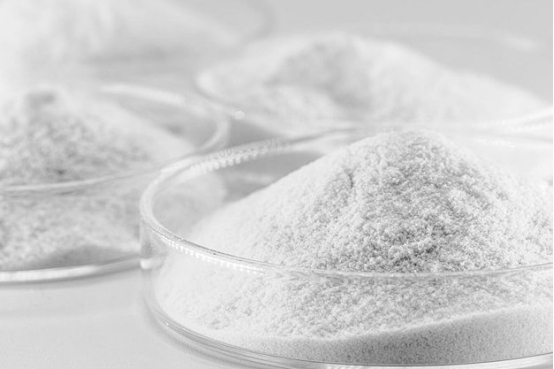
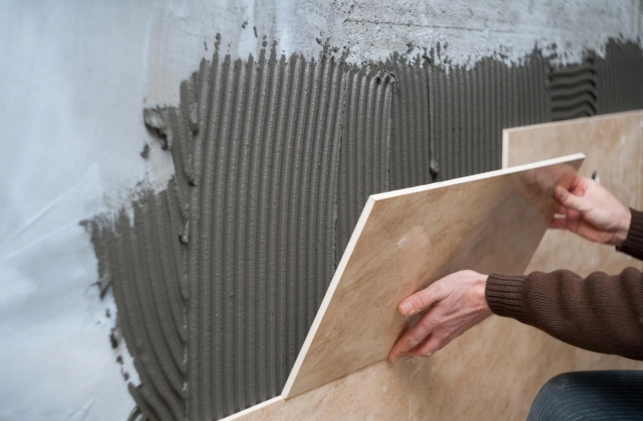
RDP is a spray-dried polymer that disperses again when water is added to a cement- or gypsum-based mix. During drying, the particles join to form a film that supports adhesion, flexibility, cohesion, water resistance, and crack control. The powder serves tile adhesive, wall putty, skim coat, waterproof mortar, ETICS, self-leveling mortar, repair mortar, and gypsum systems when every batch behaves predictably.
Why batch variation starts with raw materials
A finished powder can only be as stable as the inputs behind it. Polymer dispersion, protective colloid, anti-blocking agent, and other functional materials each affect the final powder. Even a raw material that looks acceptable may change viscosity, solids, particle size, or drying behavior. Manufacturers therefore need written specifications, incoming inspection, and supplier records rather than visual checks alone.
Raw-material checks that matter
A sound RDP raw material control program assigns an identification number to each incoming lot and records its source, test result, and release decision. The checks should match the role of the material in the process. For polymer dispersion, solids, pH, viscosity, and appearance are useful indicators. For powder auxiliaries, moisture, fineness, flow, and compatibility may be more important.
- Confirm solids and moisture so the dry basis stays consistent.
- Check viscosity and pH because they affect atomization and redispersion.
- Review particle size and flow to reduce segregation during blending.
- Quarantine materials that fall outside the approved specification.
- Keep retained samples so a later complaint can be traced to the input lot.
How spray drying controls powder structure
Spray drying turns a liquid polymer dispersion into a free-flowing powder. The liquid is atomized into small droplets, hot air removes water, and the dried particles are collected. Air temperature, feed rate, atomizer condition, residence time, and exhaust moisture all influence particle structure. A stable process keeps these variables within a defined operating window instead of relying on operator feel.
Protective colloids and particle protection
Protective colloids help the polymer particles survive drying and redisperse in water. If the colloid level or mixing sequence changes, the powder may show different blocking behavior, wetting speed, or film quality. The formulation team should control addition order, mixing time, liquid temperature, and storage before spray drying. These details are easy to overlook, yet they strongly affect RDP batch consistency.
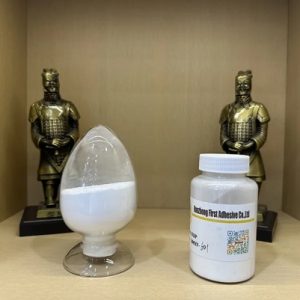
In-process controls from feed to collection
A plant also watches for wall build-up, unstable spray, pressure changes, and powder caking. These observations can reveal drift before packing. Corrective action is easier when the process log identifies the time, line condition, and material lot involved.
Finished-powder testing for reliable performance
Finished-product inspection is the final technical gate, but not the only gate. Testing after drying confirms whether previous controls worked. It also gives formulators dosage data and helps buyers compare lots using the same measures. Good RDP quality control testing combines physical checks with application testing.
Physical and chemical indicators
- Moisture: helps assess storage stability and blocking risk.
- Bulk density: supports consistent weighing, packing, and plant feeding.
- Particle size: influences wetting, dispersion, dust, and blend uniformity.
- Redispersion: shows whether the powder can reform a stable polymer phase.
- pH and ash: help identify chemistry drift and possible contamination.
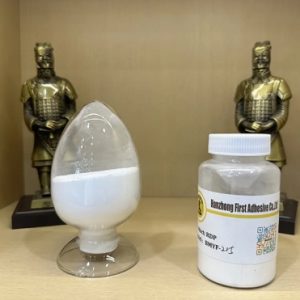
Application tests reveal changes that numbers miss
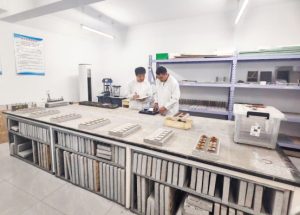
A powder can pass a basic specification and still behave differently in a finished mortar. For this reason, manufacturers should test a standard reference formula. Depending on the grade, the panel may include tensile adhesion, adhesion after water exposure, flexural strength, workability, slip, open time, water absorption, and crack resistance. The same cement, sand, gypsum, cellulose ether, defoamer, and water should be used when comparing lots.
Application testing also supports product classification. A grade suited to tile adhesive may prioritize adhesion and movement tolerance. A flexible waterproof mortar needs a balanced polymer film and water resistance. A gypsum system may need compatibility with retarder, HPMC, and air-control additives. This is where redispersible polymer powder applications become practical rather than merely descriptive.
How packaging, storage, and traceability protect consistency
The manufacturing process does not end at the dryer. RDP must be packed in moisture-resistant bags, sealed correctly, and stored away from heat and humidity. Pressure from high stacking or long storage can increase caking. Clear lot numbers on bags and shipping records allow a buyer to connect a result in the mortar plant with the exact production history.
What buyers should request
A procurement team can assess a supplier by requesting a current TDS, COA, MSDS, sample, package specification, shelf-life guidance, and complaint procedure. The documents should describe the delivered grade rather than a broad product family. Buyers should also ask whether the supplier provides a retained sample and explains how a replacement lot is compared with an approved reference.
- A COA linked to the exact batch and production date.
- A dosage range supported by laboratory trials.
- A sample for comparison with the buyer’s own raw materials.
- A traceability record from incoming material to finished bag.
- Technical support for scale-up, packaging, and formula adjustment.
Where RDP fits in the wider additive package
RDP rarely works alone. HPMC or HEC affects water retention and rheology. A defoamer controls unwanted air. PP fiber can support crack management. PCE changes flow and water demand. Gypsum retarder controls working time. A buyer may search for buy hydroxyethylcellulose or use the term hydroxyethy while comparing cellulose materials, but the important issue is compatibility with the complete formula.
The same principle applies to a defoamer powder, cement mortar defoamer wholesalers, and a cement mortar system organic silicon defoamer. The correct choice depends on the mortar, mixing energy, air content, and surface requirements. For flow-sensitive products, a polycarboxylate superplasticizer powder company may need to test compatibility with RDP. A superplasticizer for gypsum factory, pce for cement grouting, customized polycarboxylate polymer powder, and related grades should be judged by finished-system results rather than keyword labels alone.
At BING MA YONG PAI®, we connect production control with application testing for dry-mix mortar and gypsum additives. Our product range includes RDP, PCE, defoamer, gypsum retarder, HPMC, and other construction additives. We support samples, OEM packaging, and customized RDP formulation discussions based on the buyer’s cement, sand, gypsum, water, and plant process.
Our single-product pages for RDP Type 601, RDP Type 215, and RDP Type 312 show how buyers can compare product positioning before requesting a sample.
For a complete dry-mix review, buyers can also compare our PCE polycarboxylate superplasticizer category and the official BING MA YONG PAI® website when checking related additives, technical support, and supply information.
Conclusion
A reliable redispersible polymer powder manufacturing process controls variation in stages: raw-material approval, liquid dispersion, spray drying, in-process monitoring, finished-powder testing, packaging, and traceability. The goal is not simply to make a white powder that meets a visual standard. It is to deliver a material that wets, disperses, blends, forms a polymer film, and supports the same mortar performance from one batch to the next. Buyers can protect their own production by checking COAs, samples, application data, storage conditions, and technical support. When the supplier controls both the process and the finished application, RDP becomes a dependable part of modern tile adhesive, waterproof mortar, repair, self-leveling, and gypsum systems.
FAQs
Q: What is the first step in controlling RDP batch variation?
A: Approve and test every raw-material lot before production.
Q: Which RDP tests help compare finished batches?
A: Check moisture, bulk density, particle size, redispersion, pH, and mortar adhesion.
Q: How should RDP be stored after delivery?
A: Store sealed bags in a cool, dry place away from moisture and heat.